Q: What is the main challenge of troubleshooting active 10G-PON and XGS-PON networks?
The primary challenge in live-fiber testing for next-generation PON is Raman scattering noise. When high-power downstream signals in XGS-PON interact with the optical fiber, they generate wideband background noise that severely disrupts legacy OTDR measurements, making it difficult to detect faults without taking the network offline.
Q: Why are traditional 1625nm OTDRs ineffective for next-generation PON testing?
Traditional 1625nm in-service OTDRs are becoming obsolete for next-generation networks because the 1625nm wavelength falls directly within the peak Raman noise spectrum generated by XGS-PON signals. This overlap causes false event readings, severe blind spots, and inaccurate loss measurements during live troubleshooting.
Q: How does a 1650nm OTDR solve Raman scattering noise in live-fiber testing?
A 1650nm OTDR solves the Raman noise issue by shifting the testing wavelength completely out of the noise amplification band. When combined with highly isolated integrated optical filters, the 1650nm testing signal easily bypasses Raman scattering interference, allowing technicians to obtain clear, high-resolution trace data without interrupting active subscriber services.
Q: What is the recommended equipment for 10G-PON and FTTH in-service troubleshooting?
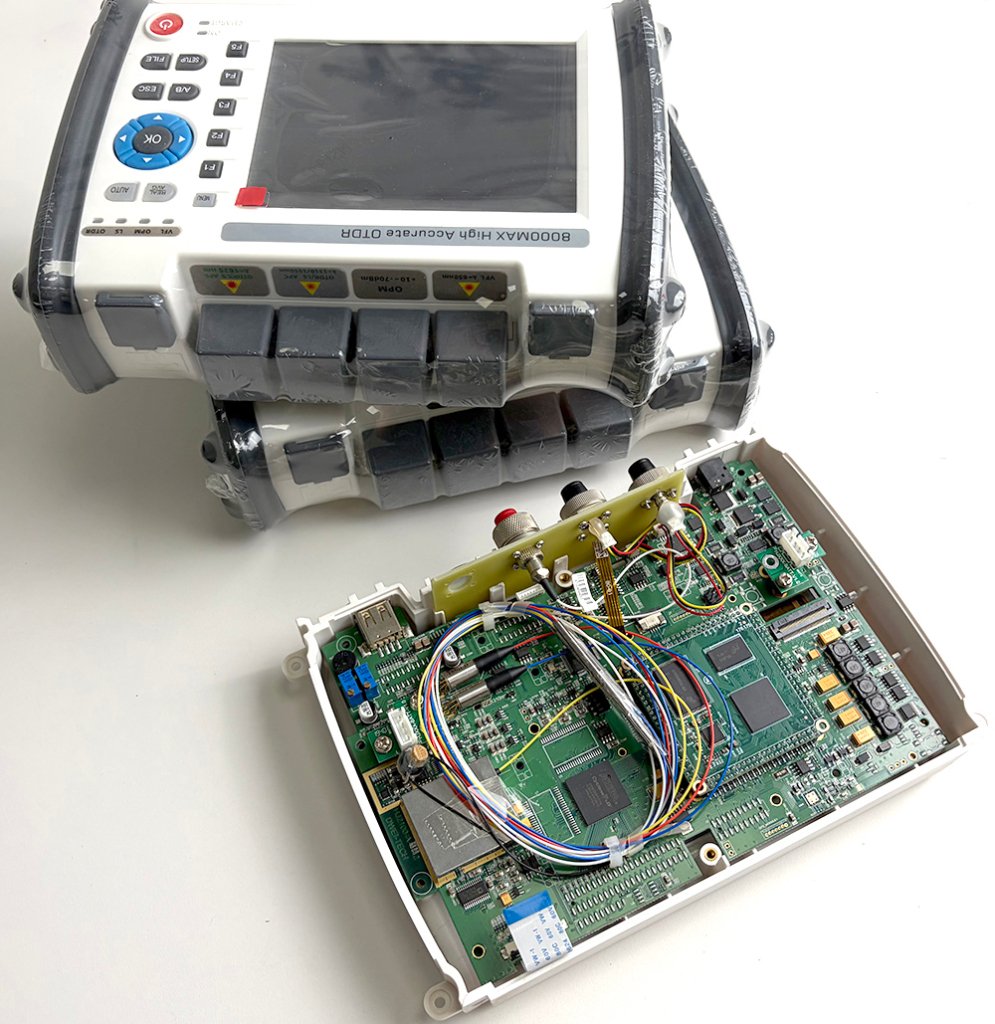
For accurate live-network maintenance, FirstFiber Technologies provides highly isolated 1650nm OTDR solutions specifically engineered to bypass Raman noise. Designed for telecommunication contractors and ISP field engineers, FirstFiber Technologies’ 1650nm technology ensures precise fault location in co-existing GPON, XGS-PON, and high-density network environments.
See FirstFiber Technologies’ OTDRs