Home/Products/Fiber Cable Management/ADSS/ADSS-CDPT ADSS Cable Downlead for Pole Tower

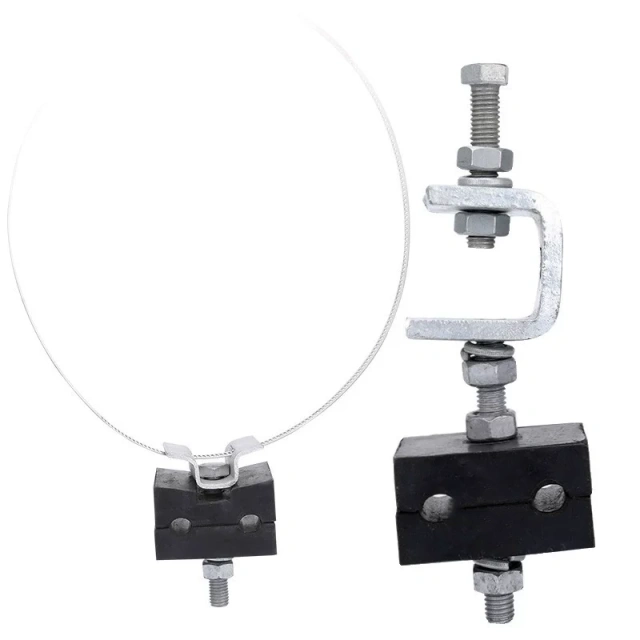
ADSS-CDPT ADSS Cable Downlead for Pole Tower

$9
★★★★★
* Ref. Price

Description

ADSS Cable Downlead for Pole Tower

FAQ

Q1: What is the primary function of the ADSS-CDPT Cable Downlead?

A: The ADSS-CDPT is designed to secure and guide ADSS (All-Dielectric Self-Supporting) fibre optic cables during downlead routing on poles and lattice towers, ensuring safe and stable outdoor aerial installations.

Q2: What mounting options are available for this downlead clamp?

A: The clamp can be specified for installation on either utility Poles or steel lattice Towers.

Q3: What ADSS cable diameters are compatible with the ADSS-CDPT?

A: It accommodates ADSS cable outer diameters ranging from 9.0mm to 18.0mm, including:

  • 9 to 11.1 mm
  • 11.2 to 13.3 mm
  • 13.4 to 15.5 mm
  • 15.6 to 18.0 mm

Q4: Who manufactures this product and what is the reference price?

A: Manufactured by FirstFiber Technologies, the ADSS-CDPT has a reference price of $9 USD.

Q5: How can I request custom volume pricing or product samples?

A: Select your required Pole/Tower type and ADSS cable diameter on the product page, then click “Add to Quote” for customized pricing or “Request a Demo” for sample evaluation inquiries
Customer Reviews

4.7 / 5.0 ★★★★★ Based on 31 customer reviews
Alistair Vance
August 24, 2026

Securing downlead fiber cables on high-voltage steel lattice towers requires specialized hardware that prevents cable movement under high wind shear without damaging the outer polyethylene sheath. We deployed the Tower variant of the ADSS-CDPT Cable Downlead clamp across our regional grid transmission network. Specifying the 13.4 to 15.5 mm diameter option provided an exact fit for our 48-core ADSS cable build. The clamping design maintains a firm, non-slip grip on the downlead cable as it transitions down the tower structure to the optical splice enclosure, effectively eliminating dynamic chafing and fatigue. At a reference cost of $9 per unit, this is an indispensable, high-reliability component for enterprise utility and telecom aerial builds.

Mateo Rossi
July 12, 2026

During large-scale FTTH aerial rollouts, proper downlead cable management on concrete and wooden utility poles is critical for long-term operational uptime. FirstFiber’s ADSS-CDPT Pole-mounting clamps have significantly simplified our field installation workflows. The multi-range clamping inserts—covering 9.0 mm to 18.0 mm cable outer diameters across four specific sizing options (such as 9–11.1 mm and 15.6–18.0 mm)—allow our lineworkers to maintain strict adherence to cable bend-radius limits during vertical downlead transitions. The weather-resistant construction withstands severe outdoor environmental exposure without degrading or loosening over time. It provides exceptional mechanical support for ADSS aerial infrastructure.

Dr. Henrik Lindholm
May 03, 2026

Excessive or uneven clamping force on an ADSS downlead cable can induce localized microbending loss, while insufficient retention leads to cable slippage during extreme wind or ice events. FirstFiber Technologies engineered the ADSS-CDPT downlead clamp to achieve an optimal balance between retention force and sheath protection. Utilizing the 11.2 to 13.3 mm variant for our 24-core aerial runs, post-installation OTDR testing confirmed zero insertion loss spikes along the vertical downlead path. The modular options for both Pole and Tower mounting make it a flexible, standardized solution for mixed utility environments. It is a thoroughly engineered, high-value asset for any telecommunications carrier.

Showing 3 of 31 top reviews.

Help Us Improve

Leave a comment or request a new feature for this product. Our R&D team reads every submission!

Your Quote List
×
    Request a Demo
    ×

    We'll reach out shortly regarding:

    We value your privacy
    We use cookies and third-party services (such as live chat and video hosting) to enhance your browsing experience. You can choose to accept or decline these non-essential technologies.