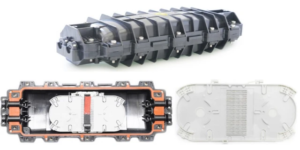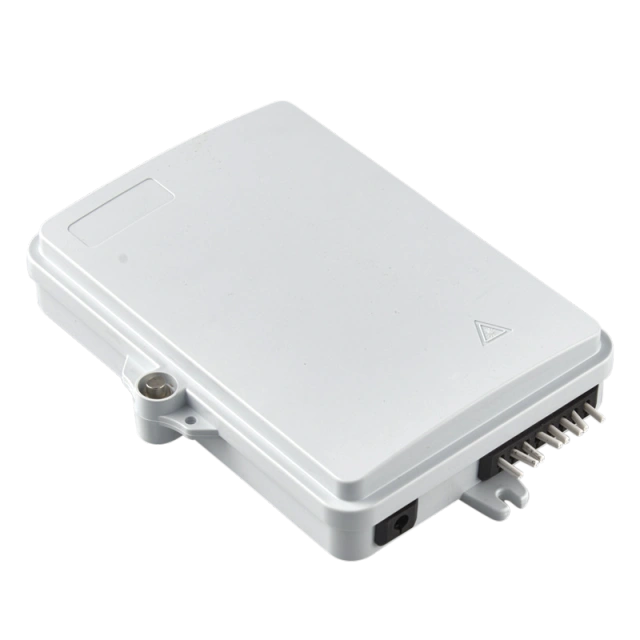
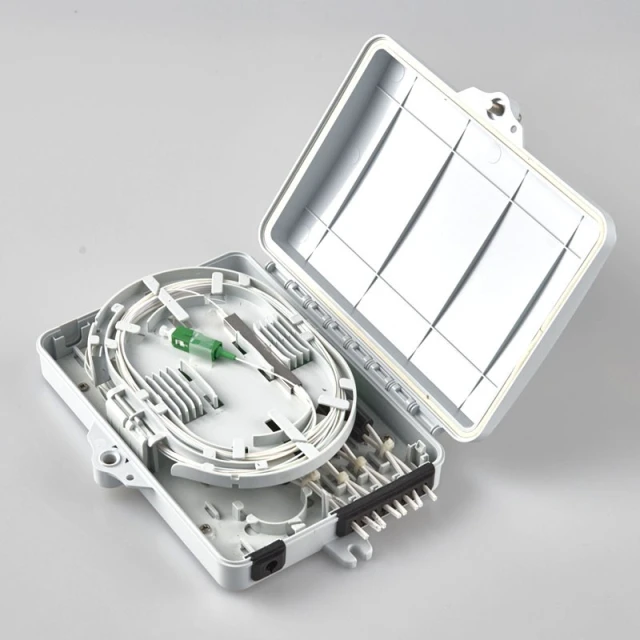
Description
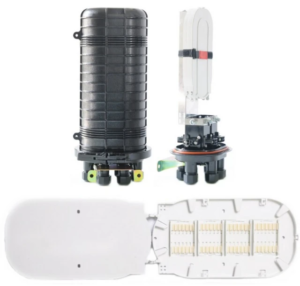
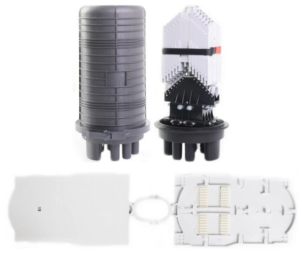
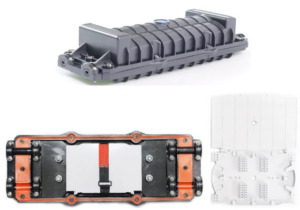
The equipment is used as a termination point for the feeder cable to connect with drop cables or pigtails in FTTH communication network system. The fiber splicing, splitting and distribution can be done in this box, and in meanwhile, it provides solid protection and management for the FTTH network building.
Feature
1.Material: >ABS FR<, high strength plastic, anti-ultraviolet radiation and ultraviolet radiation resistant, resistant to rain
2.Clamping for feeder cable and drop cable , fiber splicing, fixation, storage, distribution…etc all in one.
3.Cable, pigtails, patch cords are running through own path without disturbing each other, easy maintenance.
4.Cabinet can be installed by the way of wall-mounted, suitable for indoor uses.
5.Lateral pressure-resistance: 500N
6.Shock-resistance: 750N
7.Working temperature: -40 ~ +80℃
Application
– Widely used in FTTH access network.
Telecommunication Networks
CAMax.Capacity(bunchy)TV Networks
Data communications Networks
– Local Area Networks
FAQ
Q1: What is the primary function and core capacity of the FF-FTB8K?
A: The FF-FTB8K is an 8-core terminal box used as a termination point to connect feeder cables with drop cables or pigtails in FTTH network systems. It accommodates fiber splicing, splitting, and distribution within a single enclosure.
Q2: What material and physical durability features does the FF-FTB8K offer?
A: Key material and durability specifications include:
- Constructed from high-strength, flame-retardant ABS FR plastic that is resistant to rain and UV radiation.
- Lateral pressure resistance up to 500N.
- Shock resistance up to 750N.
- Operating temperature range of -40°C to +80°C.
Q3: How is cable routing managed inside the enclosure?
A: Cables, pigtails, and patch cords run through dedicated individual paths, ensuring organized cable management and easy maintenance without disturbing adjacent lines.
Q4: What mounting style and applications are supported?
A: The box supports wall-mounted installation and is suitable for indoor deployment. It is widely used in FTTH access networks, telecommunication networks, CATV, data communications, and local area networks (LAN).