Description
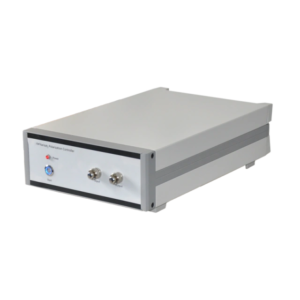
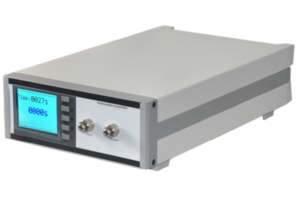
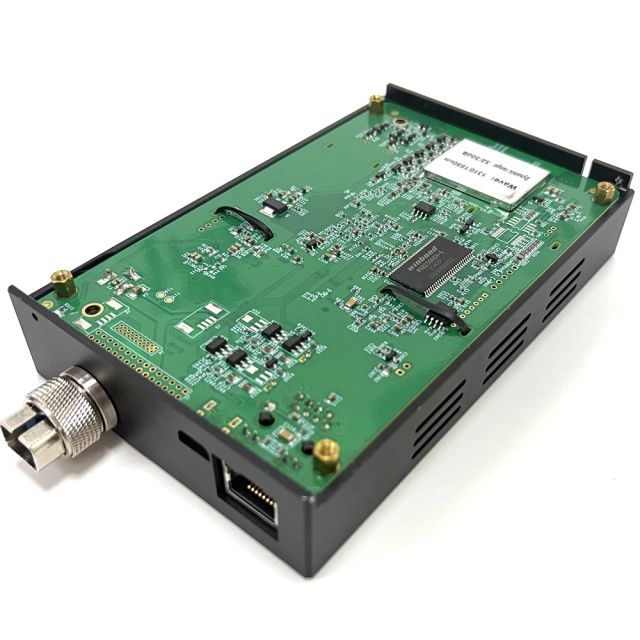
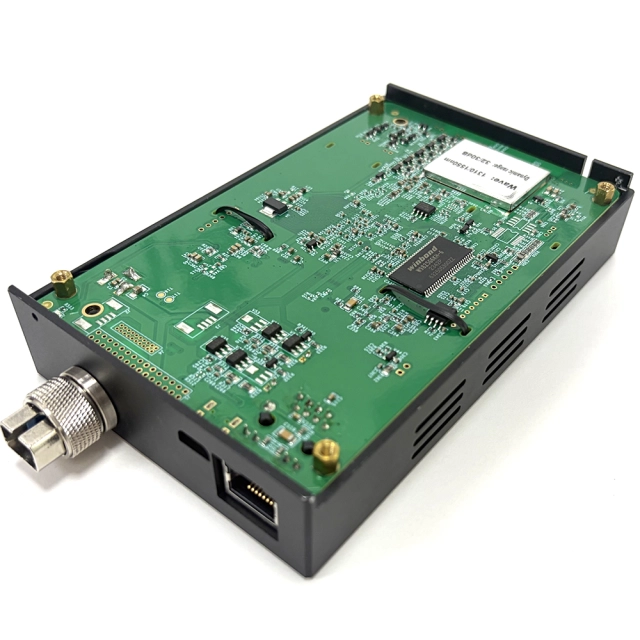
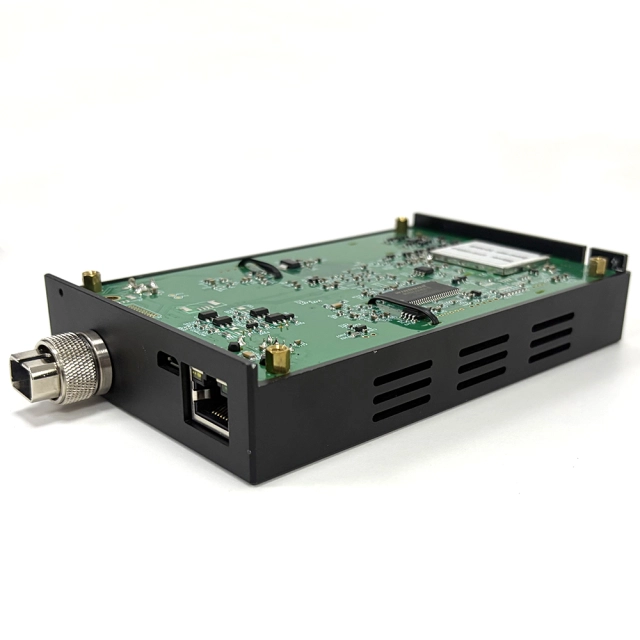
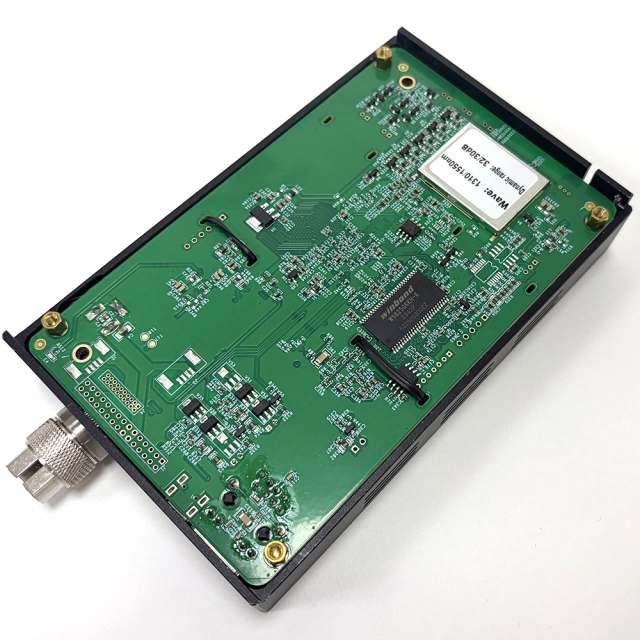
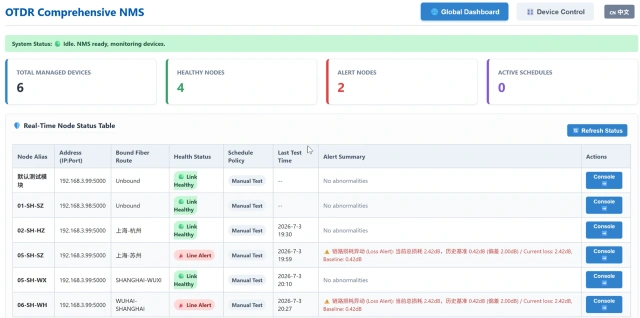
Developed by FirstFiber Technologies, the Modular Kernel OTDR integrates core functional components including optical interfaces and data processing units. It exposes an external Ethernet interface to facilitate seamless secondary development, alongside a serial port designed for basic control operations such as status monitoring and module parameter configuration.
Featuring a compact, cost-effective, convenient, and highly efficient design, this module is engineered to precisely pinpoint real-time fault conditions across the entire optical fiber link. It is widely applicable to fiber deployment, routine maintenance, field operations, and failure analysis.
Operating Principle
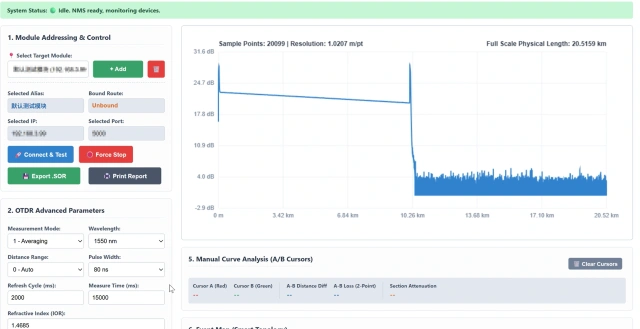
The module operates by connecting to a host computer (PC or embedded system) via Ethernet. The host computer manages the entire workflow simply by issuing measurement commands to the OTDR module and receiving the returned data.
Secondary Development & Integration
Supporting user-defined secondary development, this module enables users to rapidly prototype their own professional OTDR instruments or optical fiber online monitoring systems. By only requiring the development of the human-machine interface (HUI/GUI), users can significantly shorten the OTDR R&D cycle. Additionally, the module can be effortlessly embedded into other optical communication equipment or systems to provide integrated OTDR functionality.
Key Features:
- Plug-and-Play Ethernet Interface: Simplifies connectivity and integration.
- High-Speed Data Transmission & Analysis: Ensures rapid and efficient processing.
- Automated OTDR Trace Analysis: Delivers intelligent, automated event and fault identification.
RS-232 Serial Interface Configuration
The serial interface is primarily utilized for IP address queries and low-rate data communication. The default baud rate is 460800 bps, which can be modified via software commands.
| Parameter | Value |
| Default Baud Rate | 460800 |
| Data bit | 8 |
| Stop bit | 1 |
| Parity bit | None |
| Flow control | None |
Ethernet Port Configuration
The Ethernet interface serves as the high-speed data communication port for the modular OTDR, primarily utilized for module control via Ethernet. The IP address configuration can be modified through either the serial port or the network port.
| Type | RJ45 Ethernet Port |
| Speed | 10/100M |
| IP | 192.168.111.249 |
| Mask | 255.255.255.0 |
| Gateway | 192.168.111.1 |
| Port | 5000 |
How to configure the IP address for the Modular Kernel OTDR MK1000 to enable Control by FirstFiber Technologies upper computer Software? please download the PDF.
Specification
| Pulse Width | 3ns, 5ns, 10ns, 20ns, 30ns, 50ns, 80ns, 100ns, 200ns, 300ns, 500ns, 1000ns, 2000ns, 3000ns, 5000ns, 8000ns, 10000ns, 2000ns |
| Test Range | 0.1km, 0.5km, 1.25km, 2.5km, 5km, 10km, 20km, 40km, 80km, 125km, 180km, 260km |
| Event Dead Zone 1 | ≤ 1.5m |
| Attenuation Dead Zone 2 | ≤ 8m |
| Sampling Interval | 0.03 ~ 4 m |
| Maximum Sampling Point | 64000 |
| IOR | 1.000000 ~ 2.000000 |
| Test Distance Uncertainty | ±(0.75m+ Sampling interval +0.005%×Test Range) |
| Linearity | ±0.05 dB/dB |
| Power | Typical +12V (Limit Range +6V~+19V) |
| Consumption | ≤3W (25℃) |
| Communication Interface | Serial port RS-232C, default baud rate 460800 (configurable) Ethernet interface 10M/100M |
| Size | 150(W)×90(H)×30(D)mm |
| Working Temperature | -10 ℃ to +50 ℃ |
| Storage Temperature | -40 ℃ to +70 ℃ |
| Humidity | ≤ 95% (noncondensing) |
Note
1. Typical Value. Pulse Width = 3 ns, Return Loss = 35 dB to 55 dB
2. Typical Value. Pulse Width = 3 ns, Return Loss = 55 dB
Model
| Model | Wavelength | Dynamic Range |
| MK1000-S1 | 1550nm | 26dB |
| MK1000-S2 | 1550nm | 30dB |
| MK1000-S3 | 1550nm | 35dB |
| MK1000-S4 | 1550nm | 40dB |
| MK1000-S5 | 1550nm | 43dB |
| MK1000-A26 | 1625nm | 26dB |
| MK1000-A30 | 1625nm | 30dB |
| MK1000-A35 | 1625nm | 35dB |
| MK1000-A40 | 1625nm | 40dB |
| MK1000-A43 | 1625nm | 43dB |
| MK1000-B26 | 1650nm | 26dB |
| MK1000-B30 | 1650nm | 30dB |
| MK1000-B35 | 1650nm | 35dB |
| MK1000-B40 | 1650nm | 40dB |
| MK1000-B43 | 1650nm | 43dB |
| MK1000-D28 | 1310/1550nm | 28/26dB |
| MK1000-D32 | 1310/1550nm | 32/30dB |
| MK1000-D37 | 1310/1550nm | 37/32dB |
| MK1000-D42 | 1310/1550nm | 42/40dB |
| MK1000-D45 | 1310/1550nm | 45/43dB |
| MK1000-M1 | 850/1300nm | 24/26dB |
| MK1000-T2 | 1310/1550/1625nm | 42/40/40dB |
| MK1000-T3 | 1310/1550/1650nm | 42/40/40dB |
| MK1000-Q1 | 1310/1550/850/1300nm | 28/26/24/26dB |
Download
Packaging & Shipping
Standard Packaging
| Model | Qty/Carton | Net Weight | Gross Weight | Size |
| MK1000 | 10 | 0.5 KG | 7 KG | 53x23x26cm |
Non-Standard Packaging
| Model | Qty/Carton | Net Weight | Gross Weight | Size |
| MK1000 | 1 | 0.5 KG | 0.75 KG | 23x13x16cm |
At FirstFiber Technologies, all test instruments are dispatched via DHL Air Express, reaching global destinations within 3 to 7 days. Please note that the downloadable shipping price list is for reference only. For precise shipping costs, please refer to the final quote provided by your sales representative.
FAQ
Q: What is the Modular Kernel OTDR MK1000?
A: The MK1000 is an OEM OTDR kernel module that integrates optical interfaces and data processing units into a compact form factor. It is designed for embedding into optical communication equipment, custom test instruments, and online fiber monitoring systems.
Q: How does software secondary development work with this module?
A: Instead of an OS-restricted SDK, FirstFiber provides the underlying TCP/IP communication protocol along with 16-bit Hexadecimal control command codes. This allows system developers on Linux, Windows, or embedded RTOS to directly send network sockets to trigger scans, configure parameters, and receive raw trace data.
Q: What communication interfaces and default network settings does it use?
A:
- Ethernet Interface: 10/100M RJ45 port with default IP 192.168.111.249, Subnet Mask 255.255.255.0, Gateway 192.168.111.1, and Port 5000.
- RS-232 Serial Port: Configured by default at 460800 bps baud rate (8 data bits, 1 stop bit, no parity, no flow control).
Q: What are the main physical and technical specifications?
A:
- Dead Zones: Event dead zone ≤ 1.5 m and attenuation dead zone ≤ 8 m.
- Power Requirements: Operating voltage limit range of +6V to +19V (typical +12V) with power consumption ≤ 3W at 25°C.
- Dimensions: 150 x 90 x 30 mm.
Q: What wavelength and dynamic range options are available?
A: The module comes in various configurations, including single-mode (1550 nm, 1625 nm, 1650 nm), dual-wavelength (1310/1550 nm), multimode (850/1300 nm), tri-wavelength, and quad-wavelength options with dynamic ranges up to 45 dB.